
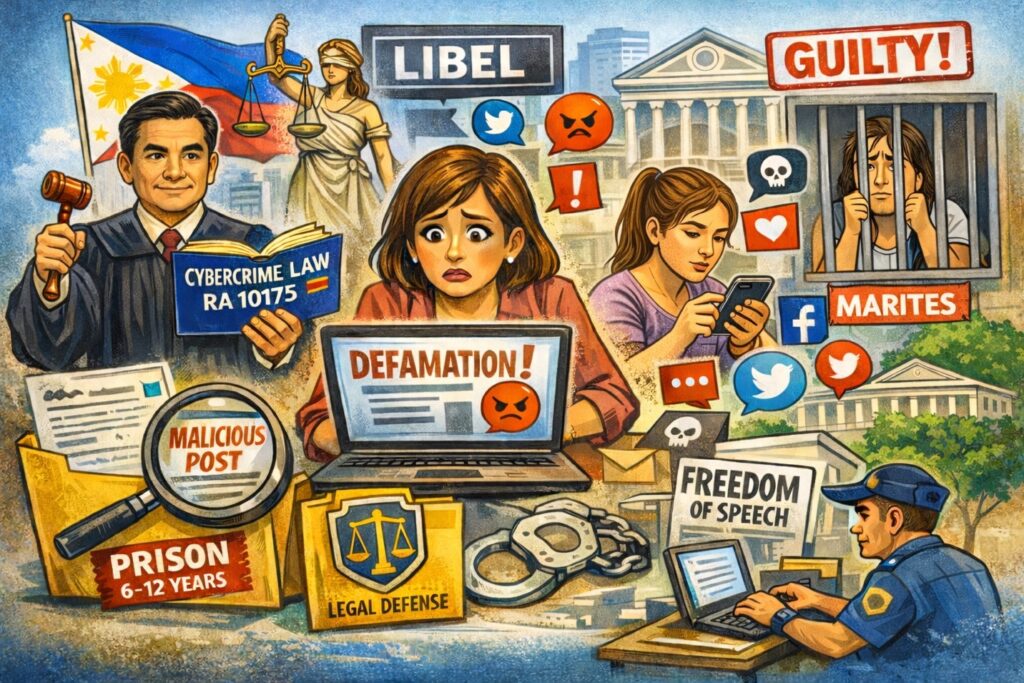
Cyber Libel Law Philippines: What You Need to Know
Date Published: April 22, 2026
In today’s digital age, a single post, comment, or message can reach thousands within seconds. While this connectivity empowers communication, it also exposes individuals to legal risks—particularly cyber libel. Understanding cyber libel law in the Philippines is crucial for protecting both your reputation and your freedom of expression.
This guide explains what cyber libel is, its legal basis, elements, penalties, defenses, and practical implications under Philippine law.
What is Cyber Libel?
Cyber libel is the online version of traditional libel, committed through digital platforms such as social media, blogs, emails, or messaging applications.
Under Section 4(c)(4) of Republic Act No. 10175 (Cybercrime Prevention Act of 2012), cyber libel refers to:
Libel as defined under Article 355 of the Revised Penal Code, committed through a computer system or similar means.
Importantly, cyber libel is not a new crime. It merely applies the existing law on libel to acts committed online.
Legal Basis of Cyber Libel in the Philippines
Cyber libel is governed by two primary laws:
1. Revised Penal Code (RPC)
- Article 353 – Defines libel as a public and malicious imputation of a crime, vice, or defect that damages a person’s reputation.
- Article 355 – Provides the means and penalties for committing libel.
2. Republic Act No. 10175 (Cybercrime Prevention Act of 2012)
- Section 4(c)(4) – Extends libel to online platforms
- Section 6 – Imposes a penalty one degree higher when the crime is committed using information and communications technology (ICT)
Elements of Cyber Libel
To successfully file or defend against a cyber libel case, the following elements must be proven:
- Defamatory Imputation
- A statement imputes a crime, vice, defect, or wrongdoing
- Publication
- The statement is communicated to a third person (e.g., posted online)
- Identifiability of the Victim
- The person defamed can be identified
- Malice
- The statement is made with ill intent or reckless disregard of truth
- Use of a Computer System
- The defamatory act is committed through digital means
Even private group chats may satisfy the element of publication if a third party reads the defamatory content.
Examples of Cyber Libel
Cyber libel may arise from:
- Facebook posts accusing someone of a crime without proof
- Viral tweets damaging a person’s reputation
- Blog articles containing false allegations
- Online reviews written maliciously
- Group chat messages shared beyond intended recipients
The format does not matter—text, images, or memes can be actionable if defamatory.
Penalties for Cyber Libel
Cyber libel carries heavier penalties than traditional libel.
- Imprisonment may range from prision mayor (6 years and 1 day up to 12 years)
- Or a fine, or both
This is because the law imposes a penalty one degree higher when libel is committed through ICT.
Defenses Against Cyber Libel
Not all online statements are punishable. The law recognizes several defenses:
1. Truth with Good Motive
If the statement is true and made for a legitimate purpose, it may not be libelous.
2. Fair Comment on Matters of Public Interest
Opinions on public figures or issues are generally protected.
3. Lack of Malice
Absence of intent to harm can negate liability.
4. Privileged Communication
Statements made in legal, official, or confidential settings may be exempt.
Cyber Libel vs Freedom of Expression
The Philippine Constitution protects freedom of speech, but this right is not absolute. Courts have consistently held that:
- Libel is not protected speech
- The State has a duty to protect individuals from reputational harm
Thus, responsible online expression is essential.
Jurisdiction and Filing of Cases
Cyber libel cases may be filed in the Philippines if:
- The defamatory content is accessed in the country
- Any element of the offense occurs within Philippine territory
Complaints are usually filed before the Office of the Prosecutor, particularly through cybercrime units.
Practical Tips to Avoid Cyber Libel
To stay legally safe online:
- Verify facts before posting
- Avoid making accusations without evidence
- Refrain from sharing defamatory content
- Be cautious even in private chats
- Think before you click “post,” “share,” or “comment”
Conclusion
Cyber libel law in the Philippines underscores a critical principle: digital platforms are not lawless spaces. What you say online carries the same legal consequences as statements made in traditional media—if not more severe.
Understanding the interplay between the Revised Penal Code and Republic Act No. 10175 empowers individuals to navigate online communication responsibly while safeguarding their legal rights.
Need Legal Assistance?
This article is for general informational purposes only and does not constitute legal advice.
If you are considering filing of a libel case or has been accused of committing libel, timely legal action is essential. For a detailed legal assessment of your situation, you may consult Llanera Law Office. We are committed to providing strategic, professional, and results-oriented legal representation.