
Child Support Law Philippines: How to Demand Financial Support
Date Published: April 17, 2026
Financial support for children is not just a moral obligation—it is a legal duty enforceable under Philippine law. When a parent refuses or fails to provide support, the law offers clear remedies to ensure that the child’s needs are met.
This guide explains how to demand child support in the Philippines, the legal basis for support, and the steps you can take to enforce your rights.
What is Child Support Under Philippine Law?
Under Family Code of the Philippines, child support refers to everything indispensable for sustenance, including:
- Food and nutrition
- Shelter and housing
- Clothing
- Medical care
- Education (including school expenses and tuition)
- Transportation and other necessary expenses
Child support is governed primarily by:
- Articles 194 to 208 of the Family Code
- Article 195 – identifies persons obliged to support each other
- Article 201 – amount depends on the needs of the child and financial capacity of the parent
- Article 203 – support is demandable from the time it is needed
Who is Obligated to Give Child Support?
The law imposes support obligations on:
- Parents (legitimate or illegitimate children alike)
- Ascendants (e.g., grandparents, if parents cannot provide)
- Siblings, in certain cases
Importantly, both parents share responsibility, regardless of marital status.
How Much Child Support Should Be Given?
There is no fixed amount under Philippine law.
Instead, the amount is determined based on:
- Needs of the child
- Age
- Health condition
- Educational level
- Financial capacity of the parent
- Income
- Lifestyle
- Assets
Courts aim for a reasonable and proportionate amount, ensuring the child maintains a decent standard of living.
How to Demand Child Support in the Philippines
1. Make a Formal Demand
Start by sending a written demand letter to the parent obligated to provide support.
This letter should include:
- Child’s needs and expenses
- Requested amount
- Deadline for compliance
A lawyer can draft this to ensure legal effectiveness.
2. File a Petition for Support
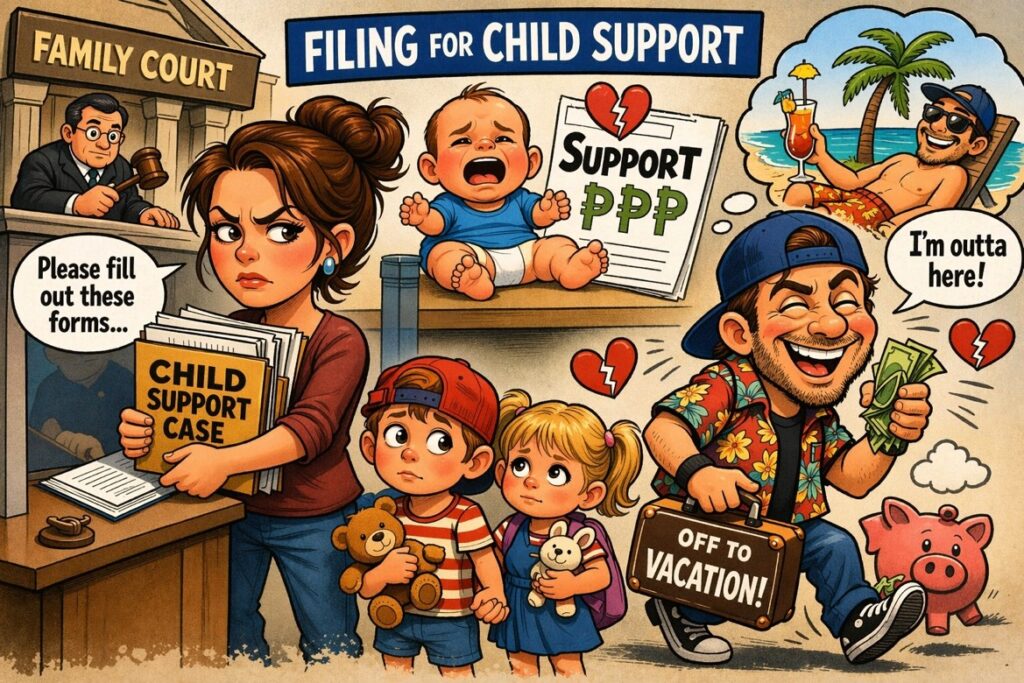
If the parent refuses or ignores the demand, you may file a Petition for Support before the Family Court.
This legal action compels the parent to provide financial support.
3. Apply for Support Pendente Lite
While the case is ongoing, you can request support pendente lite (temporary support).
This ensures that the child receives financial assistance during the trial, not just after judgment.
4. Present Evidence
To support your claim, prepare:
- Birth certificate of the child
- Proof of relationship
- Receipts of expenses (school, medical, daily needs)
- Proof of the parent’s income (if available)
5. Court Decision and Enforcement
Once the court grants support:
- The parent is legally required to comply
- Non-compliance may lead to contempt of court
- Salary garnishment or other enforcement measures may be ordered
Can You File a Criminal Case for Non-Support?
Yes, in certain situations.
Failure to provide support may also fall under:
- Republic Act No. 9262
Under this law, economic abuse includes:
- Withholding financial support
- Depriving a child of basic needs
This allows the filing of a criminal case, especially if the child or mother suffers due to lack of support.
Key Legal Principles You Should Know
- Support is a continuing obligation – it does not end unless legally terminated
- It cannot be waived – especially when it prejudices the child
- It is demandable even without court action, but enforcement requires judicial intervention
- It is retroactive from the time of demand
Practical Tips When Demanding Child Support
- Document all expenses carefully
- Keep communication records with the other parent
- Avoid informal agreements without written proof
- Seek legal assistance early for stronger enforcement
Why Legal Assistance Matters
Child support cases involve both legal strategy and proper documentation. A lawyer can:
- Draft a strong demand letter
- Compute reasonable support amounts
- File and handle court proceedings
- Secure immediate relief through support pendente lite
Conclusion
Child support is not optional—it is a legal obligation backed by enforceable rights. Philippine law ensures that every child receives the financial support necessary for a dignified life.
If the other parent refuses to provide support, you have clear legal remedies to compel compliance.
Frequently Asked Questions (FAQs)
1. Can I demand child support even if we are not married?
Yes. Both legitimate and illegitimate children are entitled to support.
2. How long does a child support case take in the Philippines?
It varies, but support pendente lite may be granted early in the case.
3. Can child support be increased?
Yes. You can file for adjustment if the child’s needs or parent’s income changes.
4. What if the father denies paternity?
You may need to establish filiation through evidence or DNA testing.
5. Is verbal agreement for support valid?
It is not advisable. Always formalize agreements in writing or through court.
Note:
This article is for general informational purposes only and does not constitute legal advice.
If you are considering filing a case, it is best to seek proper legal guidance at the earliest opportunity.
For a detailed legal assessment of your situation, you may consult Llanera Law Office. We are committed to providing strategic, professional, and results-oriented legal representation.